
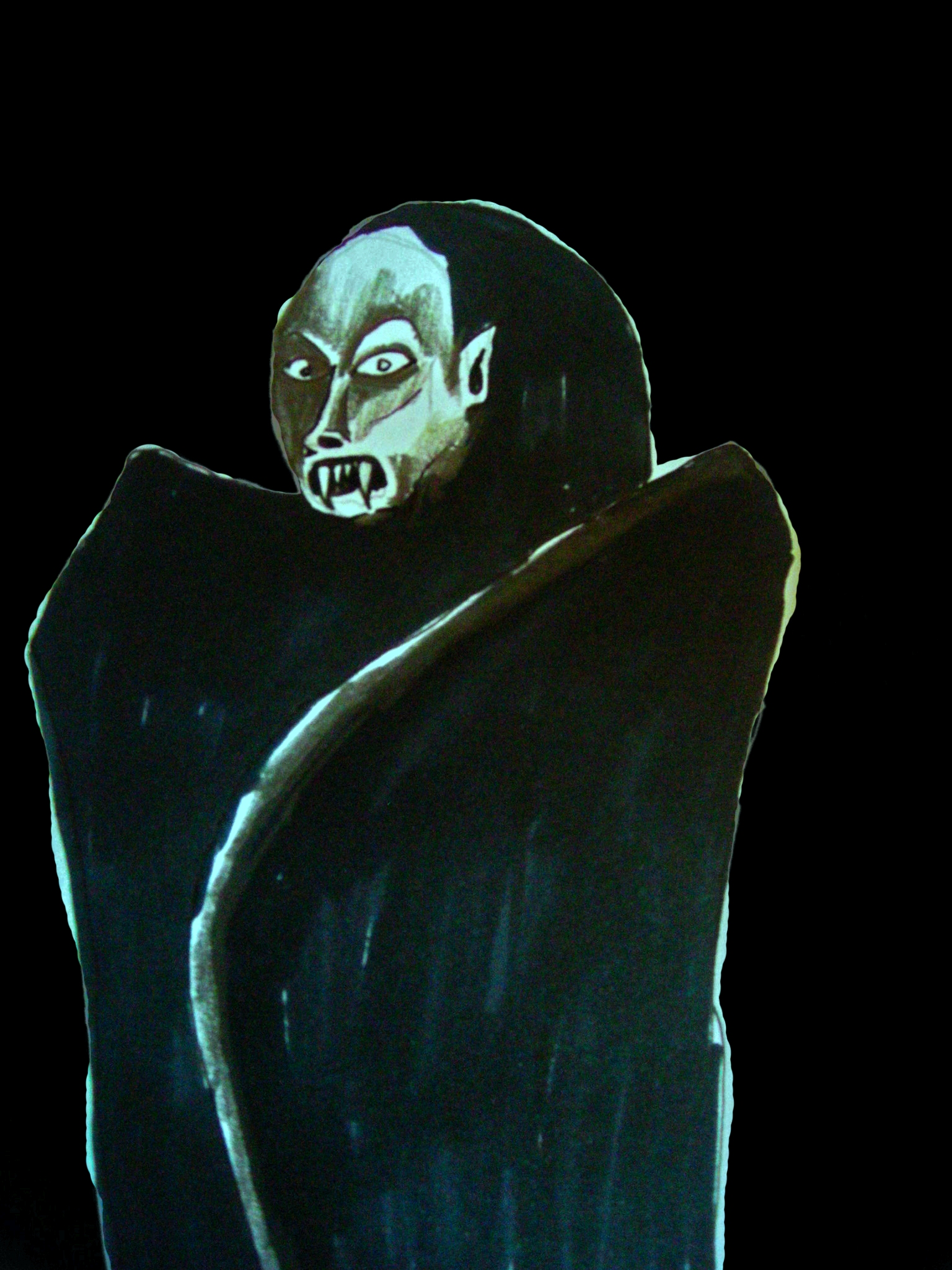
The Parable
There is an island, with a very small population. They’re devout, go to church, mostly on Christmas and Easter. Sunday masses are meager, daily masses are even more so. Monsignor John Pruitt is beloved, now frail, in his eighties. Decades ago, he was in a relationship with Mildred, who was married then, and they went on to have Sarah, who grew up not knowing who her biological father was. Now, Pruitt knows he is about to die. He wants to travel. He goes on a pilgrimage to the Holy Land. On his way to Damascus from Jerusalem, he is overtaken by a sandstorm in the desert and seeks refuge in a cave-like ruin that seems to just open up from under the sand. It is pitch-black inside. There, he is attacked by a horrifying creature that he thinks must be an angel — with enormous bat-like wings, hollow, deadly eyes glistening like fireflies, stained teeth hanging out when it opens its mouth, the clean baldness of its head drawing an unkind silhouette. During the attack, it drinks his blood from his neck, cuts open its own vein, and then feeds him its blood. In the morning, his skin has smoothened, his beard has darkened.
He is now the young Father Paul Hill. He brings the angel back to his island in a trunk, helps it hide, and tells everyone that the old Pruitt is recovering from something in a hospital on the mainland. He regularly gives people Communion. He makes sure to fill the cruets himself — a duty otherwise relegated to the altar boys. He visits his now old lover Mildred every day at home and gives her Communion there. One of those who do not receive Communion is Riley, who has recently come back to the island on parole after serving a prison sentence for killing a woman during drunk driving. He doesn’t receive Communion, not just because he is trying to get sober, but also because, after studying a swathe of religions in prisons, he decided he was an atheist. The other who doesn’t receive Communion is the sheriff Hassan, because he is a Muslim.
Then things start happening. Riley’s mother, Annie, who used to need glasses, stops needing them. Possibly so do Wade, the mayor, and his wife, Dolly, as well. Riley’s father, Ed, loses his back pain. Wade’s daughter, Leeza, has been using a wheelchair since she was somehow shot by Joe Collie by mistake, who has since become an alcoholic and been living in guilt. One day, Father Paul refuses to give Communion to Leeza and steps back up a small flight of stairs to the podium from which he preaches, indicating that he is expecting Leeza to get up on her feet, climb the stairs, and receive Communion. That is exactly what happens and everyone is convinced Father Paul is able to perform miracles. The daily masses start getting more and more packed. The more-or-less unanimously disliked Bev Keane successfully installs the Bible in the public school on the island. Recently returned Erin, Riley’s childhood friend, who has been pregnant for some time now, abruptly loses all signs of pregnancy, like she was never pregnant at all. Mildred, who was bedridden, nearing death, is fully rejuvenated, her dementia and gray hair disappear, she recognizes Sarah again. She is pleasantly shocked to meet her John again in Paul, who had been giving her Communion without her recognizing him as the father Sarah never had. She is also unpleasantly shocked at mass when he preaches about God’s war, God’s army, and casualties, and she can no longer recognize him. Leeza’s miracle makes Hassan’s son, Ali, curious and enthusiastic about the church, which leads to him and Hassan having disagreements about how God and miracles work, given his wife suffered and died from pancreatic cancer. Leeza goes to Joe Collie, tells him of her relentless hate for him, and then forgives him. He bursts out into tears, and decides to join Riley’s AA meetings with Father Paul in an attempt to get sober.
It gradually becomes clear that John, who is Paul, had been feeding people the angel’s blood during Communion, which supposedly has some kind of magic power to turn the old into their young selves, the vulnerable to their invulnerable selves, the sick to their healthy selves, the non-walking to their walking selves, the mortal to their immortal selves. (However, none of the non-flying is seen to grow wings.) John completes his transformation into his immortal self, probably by ingesting some kind of poison at some point, after which he is resurrected, and lets Bev, among a few others, in on his project of mass restoration to eternal youth. His skin burns in the sunlight. All masses take place after sunset. He convulses from excruciating pain in his stomach, which is subdued only by feeding on Joe Collie’s blood, who succumbs to his hunger and is disposed of by a sanctimonious Bev, with help from Wade, and Sturge, the island handyman. She is relieved that a “sinner,” “a letch,” “a heathen of the first order” is removed from this world. Riley is attacked by the angel after an AA meeting with John, who had come to stock up his blood for him, and succumbs to the same fate as him. He confesses his story to Riley and explains him his current physiological situation. Riley is offered blood in the Communion chalice to quench his initial hunger, which makes him realize what he has become: immortal, therefore, dead. He takes Erin out on a boat far into the sea and, at sunrise, is burnt into ashes in front of her. While he burns, he doesn’t make a sound — perhaps he doesn’t feel the need to, because an immortal is unable to feel fear, pain, and things like that — while Erin screams.
She comes back to the island to tell Sarah and Mildred everything. Sarah, being a doctor, had access to some of the residents’ blood samples, which she discovered would burn like firecrackers in sunlight. They put their heads together and figure out what’s going on.
All of this culminates in the heavily attended Easter mass, during which John persuades everyone to drink rat poison, after which they appear to die and then be spontaneously resurrected with an uncontrollable desire for drinking blood, with fireflies glistening in all of their eyes now. They’re all unkillable: bullets keep them down for five minutes and then they wake back up. Hassan fails to stop Ali from drinking the poison. The mass ends in a massacre. Bev turns against John’s plan of a slow acclimatization, followed by a controlled spread, and lets everyone out, to hasten the process and eliminate the faithless. Some feed on and kill their spouses, their children, their mothers. Talking to Mildred, John realizes what he has done. Annie and Ed refuse to give in to this hunger. Sarah gets shot and refuses blood from John, who cuts open his hand and tries to put it in her mouth to make her immortal. Leeza and Warren, her boyfriend and Riley’s younger brother, escape on a boat, all the others having been burned by Erin, Sarah, and others who fled with them. The church recreation center is turned into a sanctuary from sunlight for during the day, but is set fire to by Hassan and Ali. Bev calls Hassan a “terrorist” in a fit of rage, shoots him, and, despite her thirst, refuses to drink his “dirty blood.” The angel’s wings are shred by a dying Erin with a knife, who then fails to fly west fast enough due to his wounds and succumbs to the sunlight, like the rest of the islanders. Hassan and Ali offer their morning namaz, and then Ali burns, right after Hassan succumbs to his wounds. Bev burns, while trying to dig a hole in the ground in despair so she can hide from the sun. John and Mildred sit with their dead daughter’s head on their lap, kissing, as the sun hits them. On the boat, Leeza tells Warren she can’t feel her legs anymore. They smile at each other, as the islanders’ ashes rain on them.
The Unneeding
Suppose you’re hungry. Starving. Probably about to get sick if you don’t eat right away, when you meet some sorcerer, who you ask for help. By his sorcery, he takes away your hunger, as in, makes it disappear. You’re no longer starving. What did he just do? Did he show you benevolence? And why does it matter?
The story about the events on an island that I just told — Mike Flanagan’s Midnight Mass — can be read as relentlessly answering this question in the negative. I am writing this to convince you that this question is literally one of life and death and we better pay attention to how Midnight Mass answers it.
Let’s go back to the starving guy. Once the sorcerer does his magic, is the hungry guy truly free from hunger? And what does it mean to be free? Is it the same as not needing food? Or needing food and getting it? To put it differently, what is the sorcerer saying to the starving guy, when, instead of bringing him food by magic out of nowhere, he makes him unable to experience the urgency of hunger? What is John telling Leeza when he makes her stand up to receive Communion?
For a couple of years now, I’ve been worried by the idea that, at some point, I will die. There was a time when this thought would make me go into panic. I received therapy and medication for this, as part of my other mental health issues. But none of that would have really helped, if I hadn’t found Judith Butler saying this:
What we might understand as the relentless and repetitive mortality of the body cannot be addressed or relieved by human action. There is no “flight from embodied existence” understood as “necessity” without the loss of freedom itself. Freedom requires this reconciliation with necessity. … To seek a form of human action capable of overcoming death is itself impossible and dangerous [emphasis mine], taking us further away from a sense of the precariousness of life. In this perspective, the body imposes a principle of humility and a sense of the necessary limit of all human action.
Judith Butler, Notes Toward a Performative Theory of Assembly
I got into this strand of Butler’s work — involving the precariousness of life — because I wanted to understand why a scholar of the philosophy of gender was interested in the fact that people die. I was interested in this, not because I was interested in the topic of death itself, but because I had a hunch — almost a faith — that there’s a scholarly link between how Butler conceptualizes gender and this concern with death. But for a long time, I couldn’t make head or tail of the fact that they wrote book after book on the idea/fact of death. Why? They seem to be so far apart as concepts.
I felt I was beginning to understand the answer to this in the summer of 2025, which I spent cooped up in my apartment in Cambridge, because I was too scared to travel. During those months, I basically taught myself a class on Lacanian psychoanalysis to the best of my ability, during the course of which the mystery of Butler’s choice of topic unlocked for me, with my own fear of death. If you know any philosophy, this might be an interesting story to you, with a million tentacles unfurling inside my mind, and I’m going to tell it now. If you don’t know any philosophy, you might at least be amused.
The Unaccounted-For
It might be helpful to begin with what I mean by Butler’s philosophy of gender, the gist of which can be found in their Gender Trouble and Bodies That Matter. For me, what made it click in my head is the brief section on chromosomes, which ultimately addresses the question of why is it that, once a baby is born, we look at their genitalia and try to figure out what sex they are. Why, in the sense of: why don’t we instead measure the distance between their nose tip and one of the earlobes or their grandfather’s sperm count or whatever other criterion could have been, and classify them under categories based on this criterion?
This question sounds absurd, precisely because it is too basic. It is asking: why do we want to know? Why do we want there to be something to be known, such as a category for the child? What is the nature of this desire? Especially in light of the fact that we tend to tell people that they wear certain things and do certain things because they have a certain set of genitalia, and then, when we inspect the baby’s genitalia, it seems we would never have looked there in the first place if the desire to wear certain things or do certain things already wasn’t already put in our minds. Do we wear and do specific things because of our genitalia or do we inspect the genitalia because of the desire to do and wear specific things? Is a table a table by virtue of a bunch of specifically shaped pieces being assembled in a certain way or is it a table only when I need and see it as something to put things on, sit at, write on, etc.?
This question has no answer because the answer is the question itself. The fact that the question arises already answers the question. The question is a plea for a grammar of concepts in our head. The sought-after grammar can be thought of as a vacillation between the two possible answers to the question, and not by either one of them exclusively. Butler’s proposal, in a sense, is to live with and in this vacillation, this unaccounted-for leap we make between two concepts which is really just magic and doesn’t appear in any formula we might write down to describe the relationship between the two concepts. Like the value-generating nature of labor-power that brave people have written down as “M-C-Mʹ,” which is significant in its failure to say where the prime sign comes from. This is just another way of saying that the answer is the question itself. The observation of things and the observance of rituals cause each other, they’re coemergent.
This question is everywhere, as the reference to tables is meant to indicate. If so, how does this question surface, when it is asked in the context of the experience of life and the ontology of life and death, in general? Where is the unaccounted-for leap here?
One thing we definitely know goes on in life is that big mass of bodily processes. Like cells dividing, enzymes acting on food, chemical reactions inside cells, neurons firing at each other. There is literally no doubt about this. And this is so precise that, it is theoretically possible to write down every single chemical reaction, every event of two electrons colliding inside a person’s body during the entirety of their life. Now, let’s say we write that down on a piece of paper, hand it to the person under discussion, and tell them this is them. How might they feel? A possible reaction which is relevant for us here is offense. “How dare you? Are you trying to tell me I’m just this series of reactions?” We give a very similar reaction in a completely different kind of situation too, when we’re offered money in return for a gift that perfectly matches the amount we spent to bring that gift into existence. In a gift too, there is something unaccounted for, in the sense that we give a gift only because it is common ground between the giver and the recipient that what is actually intended as the gift surpasses the object involved in the act of gift-giving. “How dare you? Are you telling me that what I just gave you can be neatly contained in this exchange value? Of course it can’t be; there’s always something more, and that’s the point!” Perhaps some of us also feel this when someone venmoes them exactly $14.89 for $14.89 owed. “Even the most egotistically calculated exchange of favors has to rely on a first move which cannot be explained in those terms, in some grounding gesture of giving, of the primordial gift (as Derrida would have put it) which cannot be accounted for in the terms of future benefits.”1 The primordial gift is the decision to give, the spontaneously felt urge to engage in any kind of contact at all. We’re offended when this invaluable primordial gift is not acknowledged. This feeling of offense, when it comes to the act of giving in general, corresponds to a sense of being reduced to something that we can see, that is precise, that there is no room for argument over.
One might then ask: what is life then? Perhaps, like gender, life is this question itself and its state of answerlessness. In the case of gender, we know that it feels like it must have something to do with the genitalia, which are only parts of people’s bodies, nothing so special. But then we think, and we realize that we do all sorts of crazy stuff that has nothing to do with what a certain part of our body looks like, and precisely on the basis of this, those body-parts become special. Neither of these feelings are inaccurate. One would not exist without the other. The issue of what life is seems to have the same structure. We know there can’t be anything else going on apart from all the reactions that we wrote down (Substance). But we also know, without doubt, that we’re obviously not just that. After all, we “feel” things, “think” things, “believe” things, which is perhaps what makes us posit things like “souls” (Subject). These can’t just be reactions. It’s as if we look in the set of reactions, and privilege only those reactions as life which correspond to the “feelings,” “thinkings,” and “believings,” the events of being conscious, in general. Why do we make this leap from the not-so-special (Substance) to the special (Subject)? What is this general tendency in all things that are, to include in them something that is unaccounted for under the system being used to describe them?
The answer to this is the key to the gender-life link, which I’ve learned mostly from the works of Slavoj Žižek, Alenka Zupančič, Mladen Dolar. The foundational Žižek texts contain endless references to the “remainder,” the “leftover,” the “residue” in the context of the discussion of Lacan’s objet petit a. The references are so dense, interspersed, and ubiquitous that they can’t possibly be listed (just like the chemical reactions that go on in our body). But I’ll mention something from Dolar’s A Voice and Nothing More, which is amusing due to its thought-experiment-like quality. He mentions it in a rich historical context, which is not important for me now. So, I’ll present it as a hypothetical, which will make it more accessible. Imagine you hear what seems to you to be human voice. A stranger’s voice, but recognizable as human, because, for instance, it’s speaking a language you know. But you can’t find who is speaking. You ask someone passing by and they point to a box in the corner of a room. So, you say, “Ah, so it’s a recording?” They say, “No, not at all, it is a machine which has been constructed in such a way that it can imitate the acoustic effects of human speech. It’s not playing what you’re hearing, it’s producing what you’re hearing. It hasn’t been said by someone and recorded.” It’ll probably be an eerie moment. But why is it eerie? I don’t know what other people’s ideas about this source of eerieness are, but for me, the reason is the following. The existence of a machine like the one just described proves that what we call human can be reproduced in a precise, mechanical way, by putting one thing with another, following a well-defined step-by-step process, with no room for doubt anywhere. A bit like writing down the chemical reactions. It tells us that the intense, instantaneous, and unconditional connection we feel when we hear someone’s voice, when we recognize something as human voice, is nothing so special at all. It is just physics, acoustics. Usually, we know this. But this machine really says to our face very rudely that the human voice is just this and nothing more. And this is what seems hard for us to accept. It’s as if we’re almost offended. It’s that same offense of the unaccounted-for part being left unacknowledged.
All of these examples that I’m giving here — the gift, the list of chemical reactions, the voice machines — are meant to argue that, when something is precisely accounted for, it’s dead, and when there’s something unaccounted for, it’s alive. This seems to be the notional basis of all being.
The Right
If life is the unaccounted-for, then what kills living beings must be precise accounts which try to remove this unaccounted-for element from our sphere of considerations. To understand how this might surface in real-life situations, we must understand how the unaccounted-for itself surfaces in its most concrete versions in our daily life.
I’ll illustrate this with hunger; so let’s go back to the starving guy. What’s hunger? Hunger is a bodily experience which is unpleasant if unaddressed and is subdued by ingestion of food. Therefore, it’s the sum total of a bunch of chemical reactions in our body. But when we’re hungry, we could just sit and experience the hunger and approach death slowly. Why is it that we feel that we have to eat? The answer to this question has literally nothing to do with hunger itself and everything to do with a specific obsession we all have, which is to sustain our conscious, thinking selves. This desire to be alive is just there, out of nowhere, it can’t be explained, it’s not in any of the chemical reactions that can be written down on a piece of paper. Sure, the desire is a result of a bunch of chemical reactions inside our body which we can write down, but once it’s written down, it’s obvious that it doesn’t make sense to point to this reaction inside the body and describe that reaction as the desire itself. The reaction fails to exhaust the desire in such a way that this failure brings the desire into existence. Let’s call this desire the Desire, with a capital D.
So, there are two things: hunger and the Desire. Hunger itself is not what is unaccounted for. It’s the Desire that is the unaccounted-for part. If we take this dichotomy back to the starving guy, then what the sorcerer did can be described as taking away the Desire. In the situation I described involving the starving guy and the sorcerer, whether or not the chemical reactions hunger consists in are taken away themselves is not relevant. By the end of the magic, they could be there or not; it doesn’t matter. Because, regardless of whether the physiological process of hunger goes away, the absence of the Desire achieves what I described above as the thing we never do: it makes the starving guy — now not starving at all — sit and wait for death, while he peacefully experiences the feeling we call hunger as fact. For, what else would he do? Dying is not a problem for him anymore; why would he bother with eating? “‘[Immortal]’ beings do not engage in symbolic activity, since, for them, the gap between fact and Value disappears.”2 And looking for food/eating is definitely a symbolic activity because it relies on the Desire (the “Value” that says, “I better not die”) — that thing that is unaccounted for, just pops out of nowhere.
What I just said presupposes that taking away someone’s hunger — which is how I initially described the situation involving the starving guy and the sorcerer — can only come about through the removal of the Desire, while the chemical reactions that lead to the experience of hunger remain unchanged. One could object to this presupposition by asking why the sorcerer doesn’t take away the reactions themselves. Sure, the sorcerer could try that. But, as far as I can see, the result of that specific kind of magic, weirdly, would result in the starving guy never having existed. This is because if part of the sorcerer’s job is to preserve the starving guy as a being, then there must be some physical material left in his bodily structure. If that is the case, then absence of reactions — some kind of change, some kind of corrosion, some kind of transformation or other — is impossible: there’s nothing that doesn’t react to its surroundings. So, either way, as we see, the result of the sorcerer’s magic is the death/non-existence of the starving guy. Hopefully, we can now answer the question we raise before: the sorcerer did not do the starving guy a kindness when he took away his hunger.
It seems, therefore, that if the sorcerer wants to be kind to this starving guy, he must preserve the chemical reactions that lead to his experience of hunger and whatever the Desire is. Neither of these is disposable. The only way to preserve these things is to give him food, so that he can eat, and then become hungry again, and the process can continue. The logic of this thought experiment can also be seen the way uniforms are justified for schools (or any other institution). One such justification is that having everyone in the same outfit instills a sense of equality. When the sorcerer takes away hunger from the starving guy, he is telling him that he doesn’t have the right to be hungry and be fed. In an exactly parallel fashion, when the school puts a uniform on all the students, it is telling them that they don’t have the right to be and look different from each other in all sorts of ways and still treat each other as their equal. Being and looking like something is the same as hunger. Just as hunger is involuntary, the question of being and looking like something arises only when a person realizes that they have no choice in being and looking like that. Both are needs.
What this thought experiment teaches us is that the basis of all sense of fulfillment or comfort is the certainty of death. It might be better to say that life is death. When we experience something — anything, not just hunger — it’s a feeling inside our body. Therefore, it is made of chemical reactions. Chemical reactions must involve something spent and something yielded, that is, some kind of loss. Of course, matter can’t be destroyed, but it can be transformed, so, in a chemical reaction, even though there is preservation of mass, there is necessarily loss of form. It’s this loss of form that takes us from one stage of life to another, and then, eventually, to death. In other words, the Desire — the desire to sustain our conscious, thinking selves — is, ironically, the desire to continue dying. If we never die, that means we’re dead right now.
There is a strange, beautiful part in Freud’s Beyond the Pleasure Principle where he says something like this, but, when I first read it a few years ago, I was really startled by the fact this became an issue to be addressed in the book, and it made me wonder what psychedelic the guy was high on. But I made sense of this when I understood the passage from Butler. He talks about there being two kinds of organisms: unicellular ones and multicellular ones. In a sense, the unicellular ones are immortal, and the multicellular ones are mortal. The unicellular organisms merge, divide, reproduce themselves, it seems like a continuum, without death. They are just a bunch of chemical reactions. Multicellular organisms, on the other hand, die, because the notion of a change from being alive to being dead applies to them. This category of change doesn’t make sense for unicellular organisms, because they just create more and more of themselves from themselves, sometimes by dividing, sometimes by merging. Here’s a modification of this description which Freud might have approved of. There is nothing unaccounted for in unicellular beings. Everything is precise, the material divides, or it merges with something, the lines are very clear. But, in the case of multicellular organisms, because of the unaccounted-for leap, certain not-so-special reactions are arbitrarily privileged as special ones, leading to what manifests as various kinds of bodily urgencies. However, in the context of our discussion of hunger, every multicellular organism can be described as made of tiny unicellular ones, i.e., the cells themselves. These cells can be understood as the part of us that is associated with deadness, because, unicellular things are usually not judged to be alive the way human or cats or dogs are. These powerhouses of death and vulnerability, through the processes in them, sustain the multicellular, which becomes alive through the addition of the unaccounted-for. Life, therefore, is based on and exists because of death, and experiencing life is necessarily and always an experience of death. Moreover — and this is even more shocking — life/being alive necessarily involves mortality and death/being dead necessarily involves immortality: when we’re alive, we’re only so by virtue of being a kind of thing for which the category of changing from alive to dead makes sense; and we’re dead only when our cells have parted from each other, and have gone back into the elements as single cells, no longer able to be killed, forever diving and merging or becoming something else, but never really dying.
Therefore, coming back to the starving guy again, assuming being kind to someone involves respecting and preserving their life, if the sorcerer wants to be kind to him, he must confer mortality on him, he must leave him with the possibility of dying from hunger and the certainty of being fed every time he’s hungry. This is exactly the conclusion we reached before, on the basis of the discussion of what it might mean to take away someone’s hunger.
Now, if we empathize with his desire to sustain his conscious, thinking self — the Desire — then let’s say he has the right to sustain his conscious, thinking self. Assuming everything we have said so far about the Desire is correct, the right to sustain one’s conscious, thinking self becomes synonymous with the right to die, the right to have a body built from units of death, i.e., cells, more generally, the right to have vulnerabilities and needs, the right to not be invulnerable. Any notion of exercising rights or having freedoms, therefore, must be grounded in not having the right to be immortal. This lack of freedom — a necessity — creates any chance of further freedoms — possibilities — for us. Butler’s pretty moderate statement about freedom requiring a “reconciliation with necessity” doesn’t remain so moderate after all. Freedom doesn’t need “reconciliation” with necessity, it exists because of necessity. Du kannst, denn du sollst.
A question that might seem to arise in the context of this whole discussion on the Desire is the following. Given the fact that the Desire — the desire to sustain our conscious, thinking selves — pops out of nowhere and is something that we can’t reason our way into, does that mean that we should necessarily end all existence, and therefore, this way of understanding the driving force of life dooms us all to the logical conclusion of mass suicide? I don’t believe we need to worry about this, and here’s why. Assuming the Desire exists in its unaccounted for state, a being that realizes this unaccounted for state has two options — to kill itself or not kill itself. This is a tautological choice, which means that there is no way for this choice to not be a right description of the state that the being finds itself in. What is crucial to understand is that neither of these two options can be arbitrarily favored over the other. Therefore, the being is faced with a pair of tautological terms neither of which can be chosen over the other. What do we usually do in such situations? The safe bet is to not choose either. What would it mean to not choose either? It would mean exactly what it is expected when neither term in a tautological choice is picked — which is contradiction. To exist in a state of contradiction would be, therefore, the negation of the given disjunction, which, by de Morgan’s law, would be for the being to both kill and not kill itself. The question is: what is such a state of contradiction? If any of the preceding discussion is correct in its intuitions, then such a state is the state the starving guy is put in when he is fed. As we’ve already established, what feeding the starving guy basically does is pull him towards his death, but necessarily through being alive as long as possible. This is what allowed us to say that life is death, that is, to not be killed is to be killed. Therefore, given the tautological choice, the only reasonable thing for the being to do is to prolong its existence in its form by sustaining itself in its current form as long as possible. As long as the being is sustained, the contradiction remains as a necessary part of the structure of sustenance itself and thus, the apparent conflict between two terms is resolved. In other words, the reason we choose to care for each other is, perhaps, in a sense, not that we choose to do so, but instead, that we fail to choose in the first place.
The Metaphor
Midnight Mass is a cautionary tale about what happens when we try to erase the unaccounted-for from the conceptual structure of our being. John is brought back from his old age to his youth — his right to die is taken away. That is, he is killed; he is dead now. Now, he’s drunk on the angel’s blood — after all, the blood is the wine and the wine is the blood — and determined to take away everyone’s right to die. He is the sorcerer. The wine served during Communion has in it the blood of the angel. Transubstantiation becomes superfluous. We’re also told, from the very beginning, what happens when you get drunk on this kind of blood-wine: alcohol made Riley kill someone. He knows what blood-wine can do to someone: it makes them kill people — sometimes by running them over, sometimes by making them immortal; and when the former happens, the latter definitely does too. He not only denies Communion, but also abstains from it. One by one, everyone’s vulnerabilities are taken away and they are made more and more dead. When Annie no longer needs her glasses, she is being told that she doesn’t have the right to need glasses. When Ed loses his back pain, he is being told he doesn’t have the right to being tended to. When Leeza stands up, she is being told that she doesn’t have the right to exist in a wheelchair and have ramps built everywhere. And Erin obviously loses her pregnancy, because having a potential human being inside oneself is probably one of the most profound ways of being vulnerable and needing to be cared for. When everyone becomes immortal, they’re all being told that they don’t have the right for the people around them to be careful with their life, that the people around them could do anything to them and it wouldn’t matter. “Only under conditions in which the loss would matter [or exist] does the value of life appear.”3 They want more and more blood-wine. They don’t scream when the sun hits them and they die, because immortals are dead, therefore, unable to feel fear or not want to be dead — all “symbolic activities” after all. They’re now the multicellular unicellular. Then, in the morning, the angel dies, death is returned to life, necessity is returned to freedom, and Leeza can’t feel her legs anymore. She has the right to be vulnerable again. She has the right to have ramps built again. She has the right to demand the people around her to behave in a certain way towards her, which includes building the ramp. She knows that, now, she is truly free. She smiles.
It’s precisely because we’re dying right now, that we’re living. It’s also precisely because we want revenge, that we forgive. The first statement is homologously related to the second, and somehow, the text of Midnight Mass is aware of this homology. Leeza — the person who is put in the middle of one of the most shocking miracles in the plot — is also the vessel of forgiveness for Joe Collie, in a pretty long scene that, strictly speaking, didn’t need to be part of the story. This is the scene where she tells him how much she hates him, that she basically wants to have revenge on him, and then forgives him. What’s pretty strange is the amount of time that is dedicated to the description of Leeza’s hate in this scene, which ends in a declaration of forgiveness. Just as the units of life are made up of death, when we look hard enough into the structure of revenge, it’s possible to find units of forgiveness. What seems like a truly effective way to take revenge on someone is to refuse them the mode of damage that brought up the issue of revenge in the first place. This is because when someone does another a wrong, they become entwined with the process of a world/system that does wrongs like that to people in general. This is true even when the wrong done is unintended, as in the case of Joe Collie, who shot Leeza in the leg in an accident. Joe Collie is now entwined in a flow of events that subscribes to the act of shooting people in the leg. Therefore, if Leeza hates Joe Collie and wants to take revenge on him, then, the truly effective way to do that is refuse Joe Collie any such metaphorical “shot-in-the-leg,” that is, to forgive him. This doesn’t mean she has to like him, love him, or have an amiable relationship with him — which she so profusely expresses she doesn’t — but precisely because she doesn’t, as an expression of the fact that she doesn’t, she must forgive him.
Leave a Reply